"They lift up their voices, they sing for joy; over the majesty of the Lord they shout from the west. Therefore in the east give glory to the Lord; in the coastland of the sea, give glory to the name of the Lord, the God of Israel. From the ends of the earth we hear songs of praise, of glory to the Righteous One."
In the midst of chaos there is praise. In the midst of darkness there is singing. Literally in the middle of this chapter describing utter destruction --- this:
-lifting up voices
-singing for joy
-shouting
-giving glory
-singing praises
Today I'm down and discouraged, grieving losses of friendships, relationships, a few hopes and dreams. In the midst I hear ...
Praise. Lift up your voice. Sing. Shout.
Not because anything is different or because change is guaranteed. Not as a magic spell conjuring a change in circumstances. Not in order to regain what I've lost. So why then? What is there to praise?
The majesty of the Lord. The constant. The reliable. The unchangable.
The focus transfers off of me and on to The One who does not change or waver. The focus transfers off the temporal and on to the eternal.
And so I sing.
Showing posts with label Isaiah. Show all posts
Showing posts with label Isaiah. Show all posts
Monday, March 20, 2017

Lent 2017 - Day 12 - Isaiah 22:22 Shall
"He shall open, and none shall shut; and He shall shut, and none shall open." Isaiah 22:22
There is comfort in this for me. It reminds me of why I can trust. When the Lord says He's doing something, it's done; no one can prevent it.
When the Lord decrees that a person will do something, it's done. No one, no circumstances, can prevent someone from carrying out something God decreed. This comforts me because it reminds me that someone is in control in this out of control world.
Lord, I'm grateful I can KNOW your purposes will be carried out. Help me to remember when I can't see any signs of anyone being in control. Help me to trust when fear or grief tries to step in between me and my Savior. I pray I can also take part, can do what the Father is doing, and be one of those that opens and shuts at the Lord's direction.
There is comfort in this for me. It reminds me of why I can trust. When the Lord says He's doing something, it's done; no one can prevent it.
When the Lord decrees that a person will do something, it's done. No one, no circumstances, can prevent someone from carrying out something God decreed. This comforts me because it reminds me that someone is in control in this out of control world.
Lord, I'm grateful I can KNOW your purposes will be carried out. Help me to remember when I can't see any signs of anyone being in control. Help me to trust when fear or grief tries to step in between me and my Savior. I pray I can also take part, can do what the Father is doing, and be one of those that opens and shuts at the Lord's direction.
Lent 2017 - Day 11 - Isaiah 18:3 - When
Day 11 - Isaiah 18:3 - When
"When a banner is raised on the mountains, look! When a trumpet sounds, listen!" ESV
"As soon as a standard is raised ... you will see it, as soon as a turret is blown, you will hear it" NASB
Two translations of the same verse say very different things to me. (Imagine if I could read Hebrew!)
When --- look! When --- listen! That says to me, 'Pay attention!' Look for what is going on. It echoes a verse my husband is dwelling on, "The son does only what he sees the Father doing." (John 5:19) I want to see what You're doing! I don't want to miss it because I'm distracted elsewhere. I want to be tuned in.
As soon as --- you will. This is different and reassuring. It is less challenge issued and more confidence inspired. I hear in this, "My child, don't worry. Walk with me, and you won't miss a thing." Why does that touch me? The Lord is saying, "You're with me; you're part of this project. You won't miss it because you're in the midst of it."
When we're loading in at the theater (for my son's drama group), I see when the set walls are constructed. I'm there, game on, part of the show. No one has to tell me to pay attention. This is the picture of life with God.
I fear at times that I require the 'Look! Listen! Pay attention!" I'm in awe at the thought that I can walk with God . "My child, as soon as ... you'll see it. Don't fear you'll miss Me. You won't."
"When a banner is raised on the mountains, look! When a trumpet sounds, listen!" ESV
"As soon as a standard is raised ... you will see it, as soon as a turret is blown, you will hear it" NASB
Two translations of the same verse say very different things to me. (Imagine if I could read Hebrew!)
When --- look! When --- listen! That says to me, 'Pay attention!' Look for what is going on. It echoes a verse my husband is dwelling on, "The son does only what he sees the Father doing." (John 5:19) I want to see what You're doing! I don't want to miss it because I'm distracted elsewhere. I want to be tuned in.
As soon as --- you will. This is different and reassuring. It is less challenge issued and more confidence inspired. I hear in this, "My child, don't worry. Walk with me, and you won't miss a thing." Why does that touch me? The Lord is saying, "You're with me; you're part of this project. You won't miss it because you're in the midst of it."
When we're loading in at the theater (for my son's drama group), I see when the set walls are constructed. I'm there, game on, part of the show. No one has to tell me to pay attention. This is the picture of life with God.
I fear at times that I require the 'Look! Listen! Pay attention!" I'm in awe at the thought that I can walk with God . "My child, as soon as ... you'll see it. Don't fear you'll miss Me. You won't."
Friday, March 17, 2017
Lent 2017 - Day 10 - Isaiah 12:3 - Draw
"Therefore you will joyously draw water from the springs of salvation." Isaiah 12:3
I respond to this image with yearning, emotion and confusion. I find it beautiful in a magnetic way. But what does it mean?
'Joyously' is the only part I understand on the surface. I picture smiles, enthusiasm and energy.
'Draw water.' When I think of water I think life, refreshing, sustaining. Jesus offers living water so we would never thirst again. If I'm never thirsting, does that means longing is fulfilled? In Matthew, "Blessed are those who hunger and thirst for righteousness for they shall see God." I equate thirsting and drawing water with seeing and knowing God.
'Springs of salvation.' Springs to me means a never ending supply that does not run dry. There must be a source for the springs of salvation. Jesus = salvation = living water. Salvation provides for us what we need. I can't save myself anymore that I can create water. I go to the source and draw. I take something to put the water in or I drink right there. (If I have something to put it in I can share it!)
Joyous! This is life!! There is joy in this walk with Jesus. Joy in the presence of living water. Joy in refreshing.
I respond to this image with yearning, emotion and confusion. I find it beautiful in a magnetic way. But what does it mean?
'Joyously' is the only part I understand on the surface. I picture smiles, enthusiasm and energy.
'Draw water.' When I think of water I think life, refreshing, sustaining. Jesus offers living water so we would never thirst again. If I'm never thirsting, does that means longing is fulfilled? In Matthew, "Blessed are those who hunger and thirst for righteousness for they shall see God." I equate thirsting and drawing water with seeing and knowing God.
'Springs of salvation.' Springs to me means a never ending supply that does not run dry. There must be a source for the springs of salvation. Jesus = salvation = living water. Salvation provides for us what we need. I can't save myself anymore that I can create water. I go to the source and draw. I take something to put the water in or I drink right there. (If I have something to put it in I can share it!)
Joyous! This is life!! There is joy in this walk with Jesus. Joy in the presence of living water. Joy in refreshing.
Tuesday, March 14, 2017
Lent 2017 - Day 8 - Isaiah 17:17-18 - Look
"In that day man will look to his Maker, and his eyes will look on the Holy One of Israel. He will not look to the altars, the work of his hand, and he will not look on what his own fingers have made." Isaiah 17:17-18
Do I have to wait for that day? Can I accept the caution and start looking now - directing my attention to my Maker, fixing my eyes on the Holy One? To do this I have to turn my gaze away from other things - things I worship, things I have made, things I have done. Are these things I take pride in or would be tempted to boast about?
Altars. That's the one I have the hardest time identifying with. Things I've placed on a pedestal. Things I've put on a higher plane than they ought to occupy. Things or people I've placed before God. What does this look like in the 21st century? Is it the things or people I look to for satisfaction, fulfillment or to feel good? Hmmm, like my marriage, my husband, my friendships, my children. It could be a job. It could be a hobby or other pursuit. In micro moments it could be facebook when I'm tired and lonely, Netflix when I want to forget the world. These things and people aren't wrong in themselves just like the work of my hands is not a bad thing. The wrong comes in what I am looking to those things or people to provide.
Another way to ask this is who or what is my source of contentment, love, peace, well-being?
Do I have to wait for that day? Can I accept the caution and start looking now - directing my attention to my Maker, fixing my eyes on the Holy One? To do this I have to turn my gaze away from other things - things I worship, things I have made, things I have done. Are these things I take pride in or would be tempted to boast about?
Altars. That's the one I have the hardest time identifying with. Things I've placed on a pedestal. Things I've put on a higher plane than they ought to occupy. Things or people I've placed before God. What does this look like in the 21st century? Is it the things or people I look to for satisfaction, fulfillment or to feel good? Hmmm, like my marriage, my husband, my friendships, my children. It could be a job. It could be a hobby or other pursuit. In micro moments it could be facebook when I'm tired and lonely, Netflix when I want to forget the world. These things and people aren't wrong in themselves just like the work of my hands is not a bad thing. The wrong comes in what I am looking to those things or people to provide.
Another way to ask this is who or what is my source of contentment, love, peace, well-being?
Lent 2017 - Day 7 - Isaiah 14:13 - Pride
"You said in your heart, I will ... I will ... I will ..." Isaiah 14:13
What have I said in my heart that 'I' will do? This passage referring to the king of Babylon is a caution against raising myself up, against putting myself in the position of Lord and ruler. I don't intend to try to usurp, and in reality I never have the power and authority I think I have. I'm like a child climbing up on a throne, trying on a crown, and pretending to be in charge.
This Lent my pride is ever before my eyes. I'm grateful and also embarrassed. I'd kept it hidden pretty well, from myself at least. My murmurs stayed in my heart - 'I will.' My judgements stayed in my heart. My criticisms stayed in my heart. God in his mercy is pulling them into the light and placing them before me one by one. I'm sorry for thinking I'm smarter. I'm sorry for rejoicing that (I think) I can do something better. I'm sorry for anger than stems from hurt pride because I think I know better. I'm sorry for wanting control, for wanting to decide.
Out loud I say I will repent. I will humble myself before you. I will seek first the kingdom of God.
What have I said in my heart that 'I' will do? This passage referring to the king of Babylon is a caution against raising myself up, against putting myself in the position of Lord and ruler. I don't intend to try to usurp, and in reality I never have the power and authority I think I have. I'm like a child climbing up on a throne, trying on a crown, and pretending to be in charge.
This Lent my pride is ever before my eyes. I'm grateful and also embarrassed. I'd kept it hidden pretty well, from myself at least. My murmurs stayed in my heart - 'I will.' My judgements stayed in my heart. My criticisms stayed in my heart. God in his mercy is pulling them into the light and placing them before me one by one. I'm sorry for thinking I'm smarter. I'm sorry for rejoicing that (I think) I can do something better. I'm sorry for anger than stems from hurt pride because I think I know better. I'm sorry for wanting control, for wanting to decide.
Out loud I say I will repent. I will humble myself before you. I will seek first the kingdom of God.
Saturday, March 11, 2017
Day 6 - Lent 2017 - Isaiah 11:10 - Resting place
"Then in that day, the nations will resort to the root of Jesse who will stand as a signal for the peoples; and His resting place will be glorious." Isaiah 11:10
The root of Jesse = Jesus = resting place. The grammar may not work exactly, but that's how I read this. Jesus - visible above the fray. I'm assuming that his resting place is the place where Jesus is. And it is glorious.
With Jesus - the place where Jesus is - is rest. I'm in a weary place, and I can't imagine anything more glorious than a resting place. No time limits. No fatigue. No rising anxiety because of all that needs doing or all who need something from me.
If the person is a place then that place is infinitely accessible. If Jesus himself is the resting place, and if Jesus himself is with me, then I can be in a glorious resting place any day, any time.
I get there by reaching for his presence. I don't need to find God; He is already here. I need to pause, to listen, and to reach.
The root of Jesse = Jesus = resting place. The grammar may not work exactly, but that's how I read this. Jesus - visible above the fray. I'm assuming that his resting place is the place where Jesus is. And it is glorious.
With Jesus - the place where Jesus is - is rest. I'm in a weary place, and I can't imagine anything more glorious than a resting place. No time limits. No fatigue. No rising anxiety because of all that needs doing or all who need something from me.
If the person is a place then that place is infinitely accessible. If Jesus himself is the resting place, and if Jesus himself is with me, then I can be in a glorious resting place any day, any time.
I get there by reaching for his presence. I don't need to find God; He is already here. I need to pause, to listen, and to reach.
Friday, March 10, 2017
Day 5 - Lent 2017 - Isaiah 9:1 - Joy
"But there will be no gloom for her who was in anguish ... you have increased its joy. They rejoice before you as with joy at the harvest." Isaiah 9:1, 3
This makes me think joy is something You value/desire/like/give. As a Father, you long to see your children rejoicing. Yet life brings anguish and sorrow, and you don't always remove the source of anguish instantly. On this earth we suffer, we struggle, we grieve.
Does anguish always end? "There will be no gloom." In a walk with Jesus --- it's not a walk in continual anguish, is it? Does our feeling of anguish dissipate because the source of anguish is resolved, or is it because we are changed in the midst of suffering?
I think of Betsie and Corrie Ten Boom in the concentration camp. Corrie describes Betsie as walking in joy through anguishing circumstances. For Betsie they did not change; she died in the midst of them. Both women were delivered - one straight to heaven where there is no anguish ever, and one to continue to walk the earth with struggle and joy.
You want to teach us true joy. And it doesn't come from comfort, good times, or temporal pleasure. True joy is deeper. It can be experienced in the good times, but we confuse it with just being happy and enjoying life. Perhaps anguish can purify joy by propelling us into the arms of joy itself. Perhaps joy is not a fleeting emotion but a solid presence.
This makes me think joy is something You value/desire/like/give. As a Father, you long to see your children rejoicing. Yet life brings anguish and sorrow, and you don't always remove the source of anguish instantly. On this earth we suffer, we struggle, we grieve.
Does anguish always end? "There will be no gloom." In a walk with Jesus --- it's not a walk in continual anguish, is it? Does our feeling of anguish dissipate because the source of anguish is resolved, or is it because we are changed in the midst of suffering?
I think of Betsie and Corrie Ten Boom in the concentration camp. Corrie describes Betsie as walking in joy through anguishing circumstances. For Betsie they did not change; she died in the midst of them. Both women were delivered - one straight to heaven where there is no anguish ever, and one to continue to walk the earth with struggle and joy.
You want to teach us true joy. And it doesn't come from comfort, good times, or temporal pleasure. True joy is deeper. It can be experienced in the good times, but we confuse it with just being happy and enjoying life. Perhaps anguish can purify joy by propelling us into the arms of joy itself. Perhaps joy is not a fleeting emotion but a solid presence.
Tuesday, March 7, 2017
Lent 2017 - Day 4 Isaiah 7:4
{More than 5 minutes of writing today because sometimes I'm not quite there yet.}
Isaiah 7:4
"Be careful, be quiet, do not fear and do not let your heart be faint." NASB
"Listen, calm down. Don't be afraid. And don't panic over ..." The Message
"Take heed and be quiet; do not fear or be faint hearted for ..." NKJV
Three different versions of the advice to a king with an enemy on his doorstep. Today those words speak to me as I face not an enemy but a mountain of 'to-do's.'
Take heed - or listen. Follow my advice. Pay attention.
Be quiet. Lord, is 'be still' implied in this? It's impossible for me to hear unless I'm quiet, and quiet is usually accompanied by stillness. Quiet is rare in our world. Quiet does not happen without intent and purpose.
Don't be afraid - do not fear. Does this mean don't fear my inadequacies? Don't fear that I will fail? Don't fear that I will disappoint others?
Do not let your heart be faint. Don't panic. You mean I have control over this response? What?!?! How?
Faint heart --------- fixed heart
Panic ------------------- promise
My child, fix your heart, your focus on me first. Seek me first, lay everything before me, and rise to face the day firm and steadfast. This is not advice, it's more like the law of gravity, cause and effect.
My child, panic arises from a lack of trust. I say this not to chide you but to remind you there is another way. My promises erase panic. When you cling to and trust in the truth that I am good, I am love, and I am with you, your heart is strengthened and peace replaces panic. Another cause and effect.
Isaiah 7:4
"Be careful, be quiet, do not fear and do not let your heart be faint." NASB
"Listen, calm down. Don't be afraid. And don't panic over ..." The Message
"Take heed and be quiet; do not fear or be faint hearted for ..." NKJV
Three different versions of the advice to a king with an enemy on his doorstep. Today those words speak to me as I face not an enemy but a mountain of 'to-do's.'
Take heed - or listen. Follow my advice. Pay attention.
Be quiet. Lord, is 'be still' implied in this? It's impossible for me to hear unless I'm quiet, and quiet is usually accompanied by stillness. Quiet is rare in our world. Quiet does not happen without intent and purpose.
Don't be afraid - do not fear. Does this mean don't fear my inadequacies? Don't fear that I will fail? Don't fear that I will disappoint others?
Do not let your heart be faint. Don't panic. You mean I have control over this response? What?!?! How?
Faint heart --------- fixed heart
Panic ------------------- promise
My child, fix your heart, your focus on me first. Seek me first, lay everything before me, and rise to face the day firm and steadfast. This is not advice, it's more like the law of gravity, cause and effect.
My child, panic arises from a lack of trust. I say this not to chide you but to remind you there is another way. My promises erase panic. When you cling to and trust in the truth that I am good, I am love, and I am with you, your heart is strengthened and peace replaces panic. Another cause and effect.
Friday, March 3, 2017
Lent 2017 - Day 3 - Isaiah 5:15
(My 2017 Lenten discipline - 5 minutes of writing a reflection on daily reading. Unintended - 5 minutes of editing too.;-)
"Man is humbled, and each one is brought low, and the eyes of the haughty are brought low." Isaiah 5:15
Repentance is a hidden blessing of the Lenten season. I need to be 'brought low,' not in a 'woe is me,' or beating up on myself, but by looking hard and carefully at my pride.
"Thank goodness I'm not like that tax collector." How often do I allow a similar thought? Thank goodness I'm not like that person lashing out at the checker. Or those two gossiping at the table behind me. Or the woman in front of me with no teeth. My thoughts, when I acknowledge them, are embarrassing.
Or what about my pride in comparing myself so I will feel more confident? "My cake looks and tastes better. My kids are better behaved. I'm smarter/wiser/more clever." Ugh!! So, so ugly.
Or the greatest pride of all - the disease of 'I'm right.' I know best. Patting myself on the back and looking down my nose at 'the wrong.' Feeling so superior has to be the antithesis of humility.
I need to climb off my high horse and get on my knees. I'm sorry, Lord, for thinking I'm more special than any one of your creations. For exalting myself. My pride is ugly, and I am ashamed.
When I get real and admit my pride, when I acknowledge my ugly thoughts and confess ... grace flows more easily. Humility and repentance uncork grace and allow it begin to flow through me.
"Man is humbled, and each one is brought low, and the eyes of the haughty are brought low." Isaiah 5:15
Repentance is a hidden blessing of the Lenten season. I need to be 'brought low,' not in a 'woe is me,' or beating up on myself, but by looking hard and carefully at my pride.
"Thank goodness I'm not like that tax collector." How often do I allow a similar thought? Thank goodness I'm not like that person lashing out at the checker. Or those two gossiping at the table behind me. Or the woman in front of me with no teeth. My thoughts, when I acknowledge them, are embarrassing.
Or what about my pride in comparing myself so I will feel more confident? "My cake looks and tastes better. My kids are better behaved. I'm smarter/wiser/more clever." Ugh!! So, so ugly.
Or the greatest pride of all - the disease of 'I'm right.' I know best. Patting myself on the back and looking down my nose at 'the wrong.' Feeling so superior has to be the antithesis of humility.
I need to climb off my high horse and get on my knees. I'm sorry, Lord, for thinking I'm more special than any one of your creations. For exalting myself. My pride is ugly, and I am ashamed.
When I get real and admit my pride, when I acknowledge my ugly thoughts and confess ... grace flows more easily. Humility and repentance uncork grace and allow it begin to flow through me.
Thursday, March 2, 2017
Lent - Day 2 - Isaiah 4:1
{5 minute musing (+ 5 minute editing ;-) on one portion of today's reading.}
"...only let us be called by your name." Isaiah 4:1
This half a sentence - a cry, a pleading. Please let me be called by your name!
To be called by the Lord's name is to be associated with Him, to be grouped with Him, to be owned by Him. If I have His name, I'm family. His name is an external sign for all to see that I'm related.
I belong.
I have a place. I never need to wonder who I am. I never need to fear because protection is implied by sharing a name. I know that someone will fight for me, that someone will stand up for me.
Also implied by the fact of sharing a name is being chosen. Unless I was born to this name, the only way I can share it is if I was chosen, if I was invited to be called by this name. Someone wanted me.
I belong. I am chosen. I am wanted.
"...only let us be called by your name." Isaiah 4:1
This half a sentence - a cry, a pleading. Please let me be called by your name!
To be called by the Lord's name is to be associated with Him, to be grouped with Him, to be owned by Him. If I have His name, I'm family. His name is an external sign for all to see that I'm related.
I belong.
I have a place. I never need to wonder who I am. I never need to fear because protection is implied by sharing a name. I know that someone will fight for me, that someone will stand up for me.
Also implied by the fact of sharing a name is being chosen. Unless I was born to this name, the only way I can share it is if I was chosen, if I was invited to be called by this name. Someone wanted me.
I belong. I am chosen. I am wanted.
Wednesday, March 1, 2017
Lent 2017 - Isaiah 1:3
Lent. My favorite season of the church calendar. Permission, encouragement even, to let go of good things in order to pursue the best thing.
Writing is a vital part of my relationship with God (a part I frequently neglect) so my Lenten discipline this year is to write for 5 minutes reflecting on something I read in the She Reads Truth devotion for the day. This year they are spending Lent in the book of Isaiah - MY FAVORITE BOOK! - which only increases my excitement.
5 minutes of writing a day. I can do this.
Day 1
"But Israel does not know, my people do not understand" Isaiah 1:3
I am Israel. I do not know nor do I understand. This is because I'm trying to apply my own knowledge and to understand out of my own capabilities.
So often the answer is rest and receive. When I'm focusing on gathering knowledge and trying to work out understanding like God is a logic puzzle to solve, there is no space to receive. It's all me - and little of God.
Maybe that's what this 5 minute exercise is for - 5 minutes to rest and receive. To actively listen and thereby begin to know and understand. To be like Mary for 5 minutes and sit at the feet of Jesus. (I can spare 5 minutes, right?) Because I'm me, I sit at his feet and take notes. I think that's ok since I write to add another R - Remember.
I want to know. I want to understand. Is it possible that the way to knowing and understanding is to rest, receive, and remember?
Writing is a vital part of my relationship with God (a part I frequently neglect) so my Lenten discipline this year is to write for 5 minutes reflecting on something I read in the She Reads Truth devotion for the day. This year they are spending Lent in the book of Isaiah - MY FAVORITE BOOK! - which only increases my excitement.
5 minutes of writing a day. I can do this.
Day 1
"But Israel does not know, my people do not understand" Isaiah 1:3
I am Israel. I do not know nor do I understand. This is because I'm trying to apply my own knowledge and to understand out of my own capabilities.
So often the answer is rest and receive. When I'm focusing on gathering knowledge and trying to work out understanding like God is a logic puzzle to solve, there is no space to receive. It's all me - and little of God.
Maybe that's what this 5 minute exercise is for - 5 minutes to rest and receive. To actively listen and thereby begin to know and understand. To be like Mary for 5 minutes and sit at the feet of Jesus. (I can spare 5 minutes, right?) Because I'm me, I sit at his feet and take notes. I think that's ok since I write to add another R - Remember.
I want to know. I want to understand. Is it possible that the way to knowing and understanding is to rest, receive, and remember?
Monday, November 2, 2015
The Motivation behind the Oracles
"My heart cries out for Moab" Isaiah 15:5
In these oracles we should never forget that all people are God's people. He loved and loves not only Judah and Israel but ALL men - Assyrians, Philistines, Moabites, Egyptians, Cushites, etc.. He warns for the purpose of repentance. His intent is always redemption and salvation for all.
This is true even today. He doesn't force repentance, but He does graciously and repeatedly extend the opportunity.
I wrote this on a Sunday morning, and then our pastor preached on Jonah. Is this the only prophetic book that records a repentance? Jonah prophesied about 40 years before Isaiah. Ninevah was in Assyria, the enemy that was pounding on Judah's door during the time of Isaiah. Evidently, the Assyrians were cruel beyond belief, so cruel that Jonah's unwillingness to go there is understandable in human terms.
Unlike the 66 chapters of Isaiah's prophecies, we have one line from Jonah.
"Yet forty days and Ninevah will be overthrown."
Maybe he said more and it's not recorded. Maybe he just spent a day walking the city and shouting this prophecy. What happened next illustrates for us the reason God sent prophets.
"Then the people of Ninevah believed in God... (and the king issued a proclamation) 'Let men call on God earnestly that each may turn from his wicked way and from the violence which is in his hands. Who knows, God may turn and relent, and withdraw His burning anger so that we shall not perish?' When God saw their deeds, that they turned from their wicked ways, then God relented concerning the calamity which He had declared He would bring upon them. And He did not do it." Jonah 3:5,8-10
This is the heart of God!! Jonah defines it for us later on (even though he's complaining).
"For I knew that you are a gracious and compassionate God, slow to anger and abundant in lovingkindness, and one who relents concerning calamity." Jonah 4:1
I believe this is God's hope and desire for all nations and all people. This is why He sent prophets, and this is why Isaiah wrote the oracles against the nations. God's desire was that the nations would hear the warning, believe in God, and repent.
As we were reminded in chapter 14, what God intends will stand. His intent is repentance and His desire is to 'relent concerning calamity.' But God holds back from forcing repentance. He does not grab us and slam redemption into our chests, forcing us to embrace it. He offers. He warns. He knows ahead of time who will accept and who will reject. I believe He grieves.
"My heart cries out for Moab." And Assyria. And Israel. And Judah.
And Iran. And ISIS.
"For you, Lord, are good, and ready to forgive, and abundant in lovingkindness to all who call upon You." Psalm 86:5
Who is God?
After chapter 13, I leap at the first words of chapter 14! "The Lord will have compassion ... and will choose." Me! I'm reading this with my name substituted for Jacob's. Never forget that no matter how great God's wrath and anger appear when He is punishing for sin and wickedness, His compassion for His children is equally as great.
It's somewhat unique that much of this chapter is written as a taunt that reveals attitudes as well as events. I find verses 13-14 most revealing.
"But you said in your heart, I will ascend to heaven; I will raise my throne above the stars of God... I will make myself like the Most High."
Matthew Henry says the following: "It is a gracious ambition to covet to be like the Most Holy, for he has said, Be you holy, for I am holy; but it is a sinful ambition to aim to be like the Most High, for he has said, He that exalteth himself shall be abased, and the devil drew our first parents in to eat forbidden fruit by promising them that they should be as gods."
We should strive to be holy as God is holy, but we must never strive or put ourself in a position to try to be God. This may seem obvious, but I'm not confident I'm in the clear. Does my pride ever lead me to judge what God does as faulty? Do I ever think I have a better plan than what I see God doing? Do I ever reject God's ways?
I don't think I'm likely to raise a throne or a banner to myself or consciously proclaim myself to be like God. But I feel I need to be watchful of the heart attitudes that creep in and lead me to consider myself the sole authority and the one with the best ideas. When I grumble about what God is doing, perhaps I need to check my heart and make sure I'm not acting as the clay berating the potter.
I more frequently fall into this when I see things happening around me that I conclude can't possibly be the will of God. But look at verses 24 and 27.
"Surely, just as I have intended so it has happened, and just as I have planned so it will stand."
"For the Lord of hosts has planned, and who can frustrate it?"
The times that I doubt God's plans are the times I must be careful not to think of myself as God or more highly than God. When I think I could run things better. When I suspect God is impotent. When I doubt God's goodness as I look at circumstances.
This is hard! Divorce, illness, death, financial devastation, floods (literally!), fire, job loss. How do I reconcile the plans of God with the things that from my perspective seem solely destructive, negative or full of evil?
I believe that this is why knowing the character of God is crucial. When we can't see the goodness of God, we need to be able to remember who He is. From our study so far in Isaiah, here is what I have gleaned about God's character:
-God always has a plan for redemption.
-God is for the poor, the widow, and the orphan.
-God is for justice and righteousness.
-God invites us to walk with Him.
-The Lord alone will be exalted.
-The Lord is holy.
-God is with us.
-God is light, salvation, strength, song.
He planned it. It will stand. He is good.
That's all I have to stand on.
Thursday, October 29, 2015

Wednesday, October 28, 2015
Isaiah 13 - the First of the Oracles
We are diving into some difficult chapters now, the oracles against the nations. There are days that I have to remind myself, why exactly am I studying Isaiah?
If I believe that all scripture is inspired by God, I have to believe that ALL scripture is inspired by God. That means Isaiah too including all the chapters on judgment and coming destruction.
With that settled, how do I approach these chapters? I offer two suggestions that helped me not be discouraged by chapter 13. Go back and reread chapter 12. In fact, reread chapter 12 after each of the next 10 chapters at least.

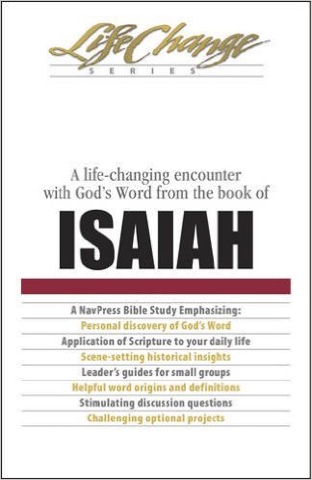 I'm using three primary resources while studying Isaiah, besides different Bible translations. This book has been the most valuable of the three.
 I stumbled over it in a box of books someone gave me to donate for them. What a gift from God just for me! The second is Matthew Henry's Commentary on Isaiah found free online. It's a lot to wade through but provides good insights. The third is Walvoord's Bible Knowledge Commentary which fills in a lot of the unfamiliar historical information. I guess a fourth would be my Strong's Concordance app.
I'm also asking the same question I have been: what does this teach me/reveal to me about the heart of God? Even chapters that dwell on what God hates reveal to me in the process the things God loves. Additionally, I can ask what the passage reveals to me about people.
A fast reading through chapter 13 in the Message reminds me:
Judgement belongs to the Lord.
God's power is greater than I could ever grasp.
God WILL take care of things in the end. He has a plan and He has it under control.
I should never take God lightly. Fear of the Lord is a real thing. (Maybe I need to reflect more on that.)
Things God does not tolerate: sin, evil, pride.
This oracle against Babylon is directed at the most important city in the Assyrian empire as well and the capital of the empire that will conquer Assyria. Babylon is also a symbol of world empires opposed to the Lord. (Rev. 17-18)
The Lord of hosts is mustering a host for battle. The description that follows is either thrilling or terrifying depending on your point of view. I don't want to be on the wrong end of the Lord's weapons of indignation! But if our Defender strikes such fear in those who oppose us, what do we EVER have to be afraid of! I see this theme of who we should fear being repeated in Isaiah. Do you fear the Assyrians? The Philistines? Do I fear a certain presidential candidate? My boss? Terrorists? Disease?
God's wrath is not indiscriminate. He is slow to anger, abounding in lovingkindness and gives countless opportunities for repentance. Yet His holiness demands justice for sinners, punishment for evil and wickedness, and an end to arrogance. We who live under the New Covenant need not fear his wrath. Yet we should not make the mistake of thinking God has relaxed his standards of holiness. His holiness is the same; His justice demands that sin be punished. The description of wrath we read in chapter 13 is the full wrath Jesus took for us. Maybe that will help us consider that sacrifice a little differently.
Tuesday, October 27, 2015
The Wells of Salvation
“With joy you will draw water from the wells of salvation.”
Isaiah 12:3
I've been surprised to discover that salvation is a theme of Isaiah. I think of salvation as a New Testament concept, but in the beginning of chapter 12 the word is used three time including the image of the 'wells of salvation.'
The word for wells means a fountain, a spring, a well, or my personal favorite, a source of satisfaction. The Old Testament if full of imagery related to wells, springs and fountains.
-springs in the midst of valleys
-fountains of living water
-a fountain shall come forth
-fountain of life
In a desert land water is literally life. In Bible times, water determined where you lived and how you travelled. If the spring dried up, you moved because death came quickly without water. Although I know that I need water to live, I take it for granted. I rarely if ever feel an urgency about water, or my urgency is based solely on the thirst of the moment.
These illustrations have lost some potency for us because we haven't experienced the thrill of water in the desert. I've even lived in the desert where I ALWAYS travelled with water, but I still never had a time I couldn't get my hands on clean water for a few coins. In this current age, we live disconnected from the spring that keeps us, our family and our livestock alive. We have never lived with the dependence on a well for our physical salvation.
Do I live with this kind of dependence on the Lord? He IS the source of life, but just as I take for granted the clean water flowing on command as I turn the faucet, do I also take salvation for granted? Do I go daily to the well to draw? Do I experience joy related to the well of salvation? I can relate to the satisfaction of a cold glass of water when I'm hot, tired and thirsty. Where is my source of satisfaction when my spirit is tired and thirsty? Do I remember the well?
Why Does Jesus Delight in the Fear of the Lord?
"The Spirit of the Lord will rest on Him, the spirit of
wisdom and understanding, the spirit of counsel and strength, the spirit of
knowledge and the fear of the Lord. And
He will delight in the fear of the Lord."
Isaiah 11:2-3
The study of Isaiah has convinced me that I don't understand the
fear of the Lord and that I probably lack the fear of the Lord. I'd be ok with that and go on my merry way,
except for this prophecy of Christ in chapter 11. If Christ not only had the spirit of the fear
of the Lord but DELIGHTED in the fear of the Lord, then I'd best take it
seriously!
To help my understanding I often turn to Strong’s Concordance (I
have an app and it’s the best $5 I ever spent!)
First I discover that in the King James no delight is mentioned; instead
the phrase is translated, “of quick understanding in the fear of the Lord.”
Next I look to the Hebrew word.
In this case, I’m more confused than ever!! The word is ‘ruwach,’ and it means to
blow/breath, literally to smell, by implication to perceive, figuratively to
anticipate, enjoy. It’s usually
translated accept, smell, or make of quick understanding, but a quick scan of
the places where it’s used shows that it is most commonly translated ‘smell', as in the smell of battle, the smell of raiment (the way Isaac
recognized Jacob), and the smell of incense or perfume before the Lord.
Or here is another use: "And as for the perfume which you shall make, you shall not make
to yourselves according to the composition thereof: it shall be unto thee holy
for the Lord. Whosoever shall make like
unto that, to smell thereto,
shall even be cut off from his people.” Exodus 30:37-38
This is a perfume, a recipe given by the Lord, to be put in the
tabernacle and will be holy. “Whoever
shall make any like it, to use as perfume, shall be cut off from his people.” “Whoever
copies it for personal use will be excommunicated.”
How in the WORLD does this word for smell get translated ONE time to ‘of
quick understanding’ followed by ‘of the fear of the Lord’? And where do smell, quick understanding and delight connect? I need more help,
so I look at the phrase in several versions.
“Fear-of-God will be all his joy and delight.”
“And shall make Him of quick understanding, and His delight shall
be in the reverential and obedient fear of the Lord.”
John Walvoord's Bible Knowledge Commentary “To fear God is to respond to Him in awe, trust,
obedience and worship.”
Matthew Henry's Commentary on Isaiah: "The believing fear of God is a special
preservative against the disquieting fear of man. We must look upon God as the
Lord of hosts that has all power in his hand and all creatures at his beck. We
must sanctify him accordingly, give him the glory due to that name, and behave
towards him as those that believe him to be a holy God. We must make him our
fear, the object of our fear, and make him our dread, keep up a reverence of
his providence and stand in awe of his sovereignty, be afraid of his
displeasure and silently acquiesce in all his disposals. Were we but duly
affected with the greatness and glory of God, we should see the pomp of our
enemies eclipsed and clouded, and all their power restrained and under check. Those
that are afraid of the reproach of men forget the Lord their Maker.”
Do I feel like I understand any better? Let me give it a whirl. God is holy and as such He is set apart from
us. God asks for our trust, our
obedience, our reverence, and our worship.
In Old Testament times, He gave His people specific instructions for how
to worship, including this special perfume that was to be carefully crafted and
used ONLY for worship, before the testimony, in the tent of meeting, where God
promised to meet with man. (Ex 30:34-36) God gave them instructions to define a
heart attitude: "Some things are reserved
just for Me because I am different than everything else." Approach a holy God with a heart that
acknowledges the difference, that acknowledges the set-apart-ness. With a breath He could destroy us. Instead He
seeks us, invites us, redeems us.
Delight comes from understanding that I owe Him everything, and I
deserve nothing. Fear of the Lord is the
wonder, awe-inspiring comprehension of all God can do, all He could do, all He
does do and all He restrains Himself from doing.
Sunday, October 25, 2015
Who will I lean on?
It’s easy for me to condemn the pride of the King of Assyria expressed in chapter 10 verse 13:
"By the power of my hand and by my wisdom I did this, for I have understanding.”
How arrogant! But really, am I guilty of the same? How often do I pat myself of the back for how well I handled something? Am I wise in my own eyes? Do I rely on my own understanding, even being unwilling to step out in faith where God has prompted because I don’t see or understand how it’s all going to work out? Am I clinging to my own understanding rather than trusting in the Lord?
“In that day the remnant of Israel and the survivors of the house of Jacob will no more lean on him who struck them, but will lean on the Lord, the Holy One of Israel, in truth.”
Isaiah 10:20 ESV
When we were trying to teach my daughter to swim, she was calm on the steps and calm when holding precariously onto the side. If her Daddy walked with her into the deeper water she cried and wrapped both arms and legs around him. He'd peel her off so he could teach her to kick, and she was terrified. She was so sure she was safer alone on the steps or clinging by her little fingers to the side than in the strong arms of her daddy. She wanted to feel in control even though letting go and trusting her daddy was a much safer place to be.
I want to trust in what I understand too. I'm uncomfortable letting go of the precarious hold I have and relying on something I can't see. I'd rather depend on my own strength, my own wisdom, my own understanding that have to let go of control and understanding and trust God to provide. Maybe verse 20 will become a prayer, that I will no more lean on (myself, my husband, the latest book, my job, well-meaning advice), but I will lean on the Lord, the Holy One, in truth.
Light in the Darkness
“The people who walk in darkness will see a great
light; those who live in a dark land, the light will shine on them.” Isaiah 9:2
I always hated in school when we were asked to
describe the theme of a book or a poem. I
love to read, but I’m just not good at seeing themes and symbols. However, Isaiah is making some obvious to me,
light and darkness being one of them.
The word used here for darkness means literal
darkness, but can also mean misery, destruction, death, ignorance, sorry or
wickedness. The root word it is taken from means to darken as in withholding
light. Even more interesting to me is
that the phrase ‘dark land’ means shade of death, the grave or shadow of
death.
I’ve felt like I’ve been in darkness. Darkness by
definition means seeing is not possible, and there have been times I haven’t been able to see the way forward. Depression has been my darkness. Sin and anger have been my darkness. Unforgiveness has been my darkness.
Darkness is overcome by light. Light is the hope in the darkness, the cure of
darkness. Here the word for light means illumination,
luminary in every sense, happiness, morning, sun. In Revelation Jesus refers to himself as the
Bright Morning Star. John calls Jesus
the Light. It sounds trite and cliché to
say Jesus is the light in darkness, but it is also truth.
The darkness of wickedness (my unforgiveness for
example) is overcome by the light of Christ who forgave ALL my sins and asks me
to forgive others. As I submit and
repent, light shines in my darkness.
The darkness of hopelessness is lightened by the
presence of Christ. Even when or
especially when physical death is immanent, Christ is the reminder of eternal
life, that this world is just a shadow of eternity.
The people of Isaiah’s time faced a darkness of
distress and anguish, a darkness of very real fears of a very real enemy, and a
darkness of ignorance through rejecting God, His ways and His prophets and
looking to man for solutions. Isaiah
prophesied that these people in darkness would see a great light. We read with the knowledge that he is
foretelling Christ, but to the people light symbolized hope, help, even deliverance.
When we say Jesus is the light, we are saying He
is what overcomes darkness. Whatever the darkness we walk in, Christ has the
answer. Christ is the answer. Not the answer that we have decided will fix
everything, but the presence that changes everything. “Those who live in a dark land, the light
will shine on them.”
Subscribe to:
Posts (Atom)